

Aperture refers to the size of opening inside the lens that allows light to enter to make contact with the camera sensor (or camera film). The value is represented either as a ratio (e.g. 1:4.5) or – traditionally- as a focal length stop (e.g. f/4.5) otherwise referred to as “f-stop”.
According to the traditional f-stop values (listed below) each change in f-stop essentially increases (doubles) , or decreases (halves) the aperture opening. With improvements in digital technology, partial increments (1/2 stops or 1/3 stops) can be selected as well. The traditional aperture f-stops are as follows:
f/1.0 – f/1.4 – f/2 – f/2.8 – f/4 – f/5.6 – f/8 – f/11 – f/16 – f/22
The effect that changing the aperture setting has on exposure can sometimes be confusing to remember because a smaller aperture number (1:2.8) indicates a larger diameter opening to gather light, and a larger number (1:22) indicates a smaller diameter opening.
The following video does a great job explaining aperture, and f-stops.
[vimeo 19603662 w=500 h=281]
APERTURE AND AVAILABLE LIGHT
One way to think of aperture values as they relate to brightness of the images is to relate it to Shutter Speed values. With Shutter Speeds in the fractions of a second (1/2 second or faster) a smaller number (i.e. the denominator of the fraction) allows more light, and a larger number allows less light. For example, a shutter speed of 1/125 of a second allows more total light than 1/250. With aperture, f/11 allows more light than f/22.
While Shutter Speed refers to how long the shutter stays open when taking a picture, Aperture refers to the size of the opening the lens is allowed to gather light from the scene you are photographing. Aperture refers to the area of light gathered from the image your taking, while shutter speed refers to the duration the light gathered (aperture) is allowed to make contact with the sensor.
If you still have a hard time understanding aperture, try this at home. Go to a dark room, and look at the opposite wall through a straw, then turn on the light for a half of a second. Then do the same thing while looking through a paper towel tube. It will appear to your eye as though the wall was “brighter” while looking through the paper towel tube because more total light was making contact with your eye.
 THE CAMERA CONNECTION
Different cameras place different emphasis on aperture when using camera “pre-set” shooting modes such as landscape, portrait, or close-up, so you’ll have to experiment with those shooting modes to know if the camera places emphasis on aperture.
To take control of the Aperture setting you can select the Aperture Priority shooting mode – usually indicated with the symbol (Av), or (A) on the Shooting Mode dial. When shooting in Aperture Priority, YOU select the aperture, and the camera balances the exposure by choosing the Shutter Speed. Depending on the setting, you may need to adjust ISO to gain balance available light for a good exposure.
THE CAMERA CONNECTION
Different cameras place different emphasis on aperture when using camera “pre-set” shooting modes such as landscape, portrait, or close-up, so you’ll have to experiment with those shooting modes to know if the camera places emphasis on aperture.
To take control of the Aperture setting you can select the Aperture Priority shooting mode – usually indicated with the symbol (Av), or (A) on the Shooting Mode dial. When shooting in Aperture Priority, YOU select the aperture, and the camera balances the exposure by choosing the Shutter Speed. Depending on the setting, you may need to adjust ISO to gain balance available light for a good exposure.
USES AND TRADE-OFFS
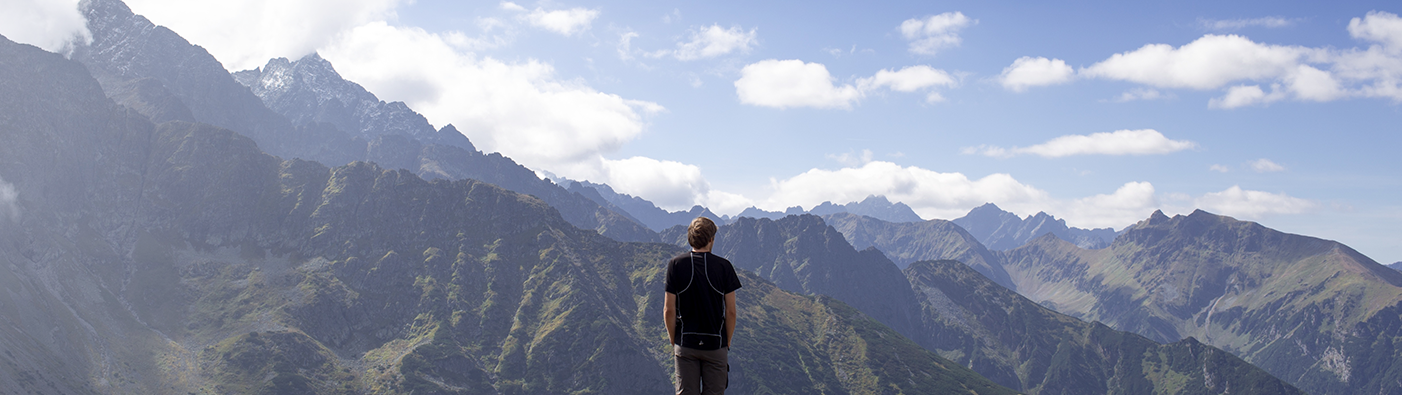
Selecting aperture can make a huge different in the quality of your photograph because the effect that Aperture has on the total horizontal distance of the image that remains in focus – otherwise known as Depth of Field (DOF). Simply put, the smaller the f/stop number (and therefore the larger the aperture) the shorter the Depth of Field.
Beautiful landscape photos tend to use a large DOF. This large f-stop number (e.g. greater than 1:11) is actually a small aperture opening. Portrait photos with that nice, blurred background tend to use a small DOF. The subject is in focus, but the rest of the scene is out of focus because the Depth of Field is so shallow. This small f-stop number (e.g. less than 1:8) is actually a larger aperture opening.


Again, this can be confusing to remember because a smaller Aperture (f/stop) number equates to a larger opening, but a shallower depth of field. Perhaps remember Depth of Field as if you were standing in a swimming pool. The smaller the f-stop number (e.g. 1:2.8) the shallower the depth, while the larger the f-stop number (e.g. 1:22) the deeper the Depth of Field. (DOF)
To read more about Depth of Field and how to use it in your photography, click HERE: DEPTH OF FIELD
FINER POINTS: EACH LENS HAS ITS OWN LIMIT
Note that each lens has a maximum aperture, or a maximum potential to gather available light. Most common lenses are about 1:3.5, while sports photographers often use 1:2.8 for additional light gathering capacity. If your lens aperture is listed as f/4 (1:4) your camera will not let you select a wider aperture (smaller number) the 4. For this reason, many photographers taking photos in low-light situations will have to increase the ISO setting to make the camera have enough light to take a photo at the shutter speed fast enough to stop the motion.
 It is also important to note that on most inexpensive zoom lenses, the maximum aperture changes as you zoom from wide angle to telephoto. This is noted on the camera lens such as 1:2.8 – 5.8 in the image. This particular zoom lens ranges from 15.1mm to 60.4mm in lens length. What is important to remember is that zooming in from a wide-angle photo to close-up result in the camera having to decrease the size of the aperture it can use to gather light from the scene. If you’re shooting in Aperture Priority (Av) or (A) AND zooming in and out at your subject, this can have the effect of the camera not having enough light to keep the same shutter speed.
The following video shows a series of photos with the user changing the aperture, and shows how the camera adjusts shutter speed to make a consistent exposure of the image.
[youtube https://www.youtube.com/watch?v=Sg0Nsq1pFiA&w=420&h=315]